PLC Control Panels
📝 Machine Overview
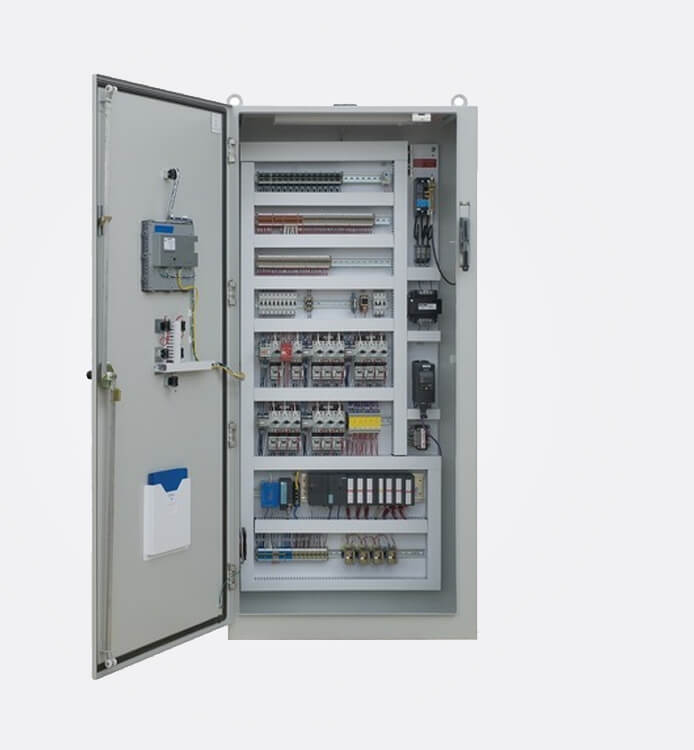
Industrial PLC Control Panels are the centralized nervous system of automated machinery and process lines. They are custom-engineered enclosures that integrate a Programmable Logic Controller (PLC), human-machine interface (HMI), power distribution, motor controls, safety circuits, and field device I/O (Input/Output). Far more than a simple electrical cabinet, these panels are designed to provide reliable command, control, monitoring, and data acquisition for complex industrial operations, ensuring safety, repeatability, and operational intelligence.
Automated Process Control: Sequencing batch reactions, managing filling lines, controlling temperature zones.
Machine Automation: Governing the logic, motion, and safety of CNC machines, assembly robots, and material handling systems.
Building Management & Utilities: Controlling HVAC, compressed air systems, water treatment plants, and facility power management.
Packaging Line Integration: Synchronizing conveyors, fillers, cappers, and labelers into a cohesive line.
Remote Monitoring & SCADA Integration: Acting as a local node in a wider Supervisory Control and Data Acquisition (SCADA) network.
Manufacturing & Discrete Automation
Food & Beverage Processing
Pharmaceutical & Chemical Processing
Water & Wastewater Treatment
Oil & Gas
Mining & Minerals
Packaging & Logistics
Automotive & Aerospace
The PLC is the core processor, executing a user-programmed logic sequence to monitor inputs (sensors, switches) and control outputs (motors, valves, actuators). The panel architecture follows a hierarchical design: main power distribution, branch protection, control circuits (PLC, relays), and communication networks. The HMI serves as the operator’s window into the process, allowing for command input, real-time visualization, alarm management, and data trending. All components are integrated via a meticulously designed wiring scheme and network topology.
By Application Scope:
Machine-Specific Control Panels: Dedicated to operating a single complex machine (e.g., a mixer, press, or packaging line).
Process Skid Control Panels: Mounted on process skids (pumping systems, filtration skids) to control a specific unit operation.
Process Area (Packaged) Control Panels: Centralized panels controlling multiple machines or an entire process area within a plant.
Motor Control Centers (MCCs): Specialized panels focused on the control and protection of multiple electric motors.
By Environmental & Industry Design:
Standard Industrial (NEMA 12/4): For general factory environments with dust and light moisture.
Washdown (NEMA 4X): Stainless steel construction with sealed components for food, beverage, and pharmaceutical environments requiring high-pressure cleaning.
Hazardous Location (NEMA 7/9): Designed for areas with flammable gases or combustible dusts (ATEX, IECEx certified).
Outdoor (NEMA 3R/4): Weatherproof enclosures for external installation.
⚙️ Technical Specifications & Features
" Core Technical Specifications "
| Parameter | Specification Range | |
|---|---|---|
|
1 |
Enclosure |
Carbon Steel (powder-coated), Stainless Steel 304/316L; NEMA 12, 4, 4X ratings.
|
|
2 |
Enclosure Size |
Wall-mount to large free-standing (e.g., 2000mm H x 1000mm W x 600mm D).
|
|
3
|
Main Power Incoming |
120VAC to 600VAC, 3-Phase; 30A to 800A+ main circuit breaker.
|
|
4
|
PLC Platform |
Major brands (Siemens, Allen-Bradley, Schneider, etc.); I/O count from 32 to 2000+ points.
|
|
5 |
HMI Display |
Touchscreen Panel PC or dedicated HMI; sizes from 7″ to 21″+.
|
|
6
|
Motor Controls |
Variable Frequency Drives (VFDs), Soft Starters, Contactors, Overload Relays.
|
|
7 |
Network Communication |
Ethernet/IP, Profinet, Modbus TCP/IP, RS-485; optional wireless.
|
|
8 |
Safety System |
Dedicated Safety Relay or Safety PLC (CAT 3/4, PL e); e-stop circuits, safety door interlocks.
|
|
9 |
Power Distribution |
DIN-rail mounted circuit breakers (MCBs, RCBOs), fuses, terminal blocks.
|
|
10 |
Wiring Standards |
ANSI/NFPA 79, UL 508A; color-coded, labeled, with ferruled ends.
|
|
11 |
Heat Management |
Air conditioning, heat exchangers, or filtered fan systems.
|
|
12 |
Documentation |
Provided as-built schematics, I/O lists, network diagrams, PLC code.
|
" Advanced Technical Features "
Core Features
Robust Power Conditioning & Protection: Includes main disconnects, surge protection, line reactors, and harmonic filtering to safeguard sensitive electronics and ensure stable operation.
Structured, Modular Design: Logical zoning of components (power, PLC, drives) with segregated wireways improves serviceability, thermal management, and EMI/RFI immunity.
Advanced Diagnostics & Visualization: The HMI provides intuitive graphical overviews, real-time alarm lists with timestamps, and diagnostic screens for quick troubleshooting of field devices.
Cybersecurity Hardening: For networked panels, features include managed industrial switches, firewall rules, user role management, and disablement of unused ports/services.
Scalable & Future-Ready Architecture: Spare I/O capacity (typically 20%), spare wireways, and modular PLC racks allow for future expansions or process modifications without panel replacement.
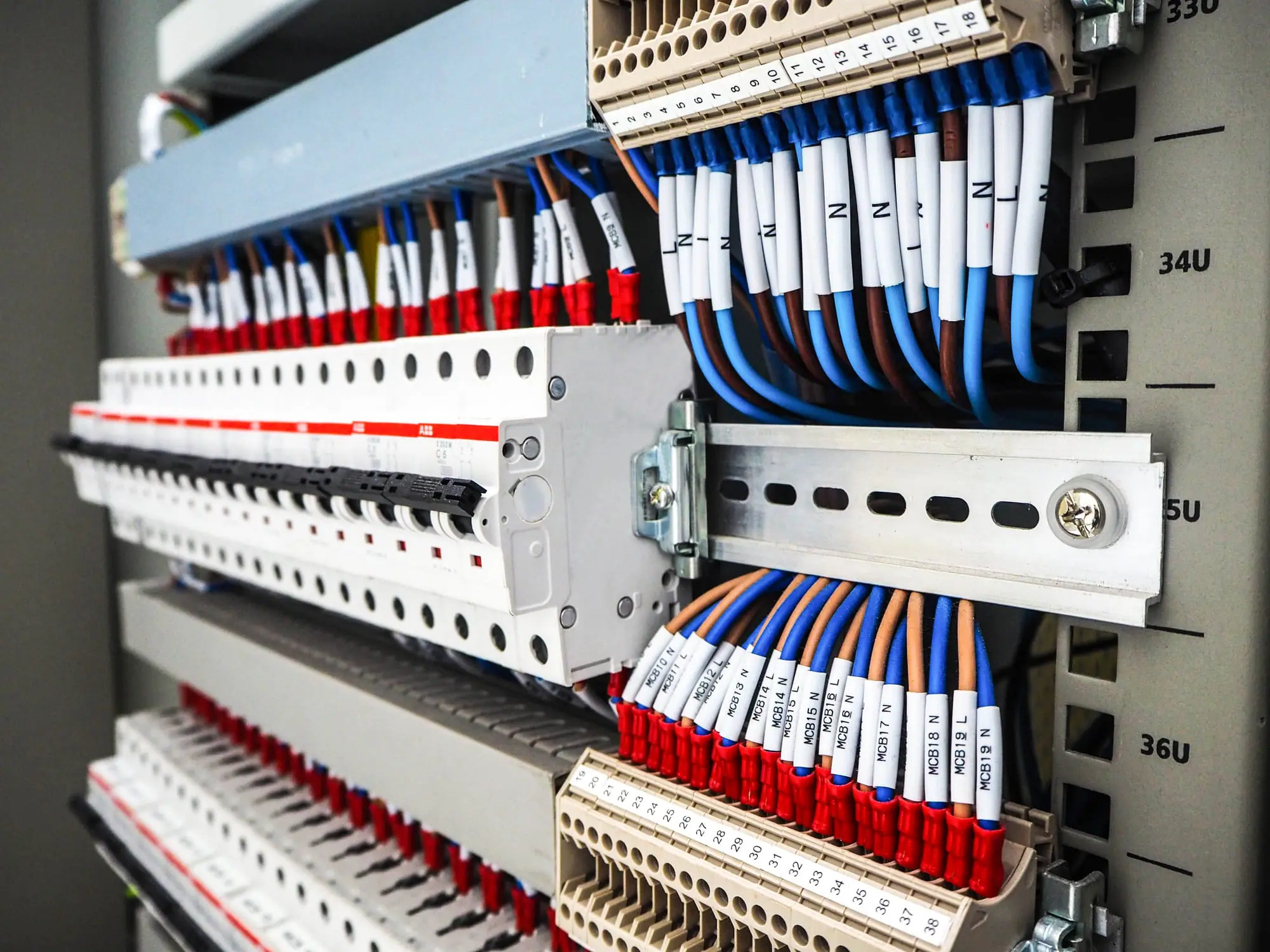
Professional Wiring & Labeling: Precision wire harnessing, permanent wire markers, and component labels on both the device and the schematic ensure clarity for installation and maintenance.
Competitive Advantages
Single-Source System Integration: We engineer the complete control solution, ensuring seamless compatibility between hardware, software, and the field devices, eliminating interface risks.
Enhanced Operational Uptime: Reliable components, robust design, and built-in diagnostics minimize unplanned downtime and reduce mean-time-to-repair (MTTR).
Compliance & Safety Assurance: Panels are designed and built to applicable electrical safety standards (UL 508A, IEC 60204-1) and can incorporate functional safety (SIL/PL) for critical processes.
Optimized Lifecycle Cost: While the initial investment is defined, the high reliability, ease of maintenance, and scalability result in a lower total cost of ownership over decades of service.
Process Expertise Embedded: Our panels are not just assembled; they are engineered with an understanding of the process they control, leading to more intuitive operation and effective automation.
Installation & Commissioning
Installation requires a suitable location (considering environment, access, and cable routing), connection to main power, and network drops. Our service includes detailed installation drawings, on-site checkout, PLC program loading, system commissioning, and comprehensive functional testing (FAT/SAT). We provide operator and maintenance training specific to the panel and its controlled process.