Centrifugal Separators
📝 Machine Overview
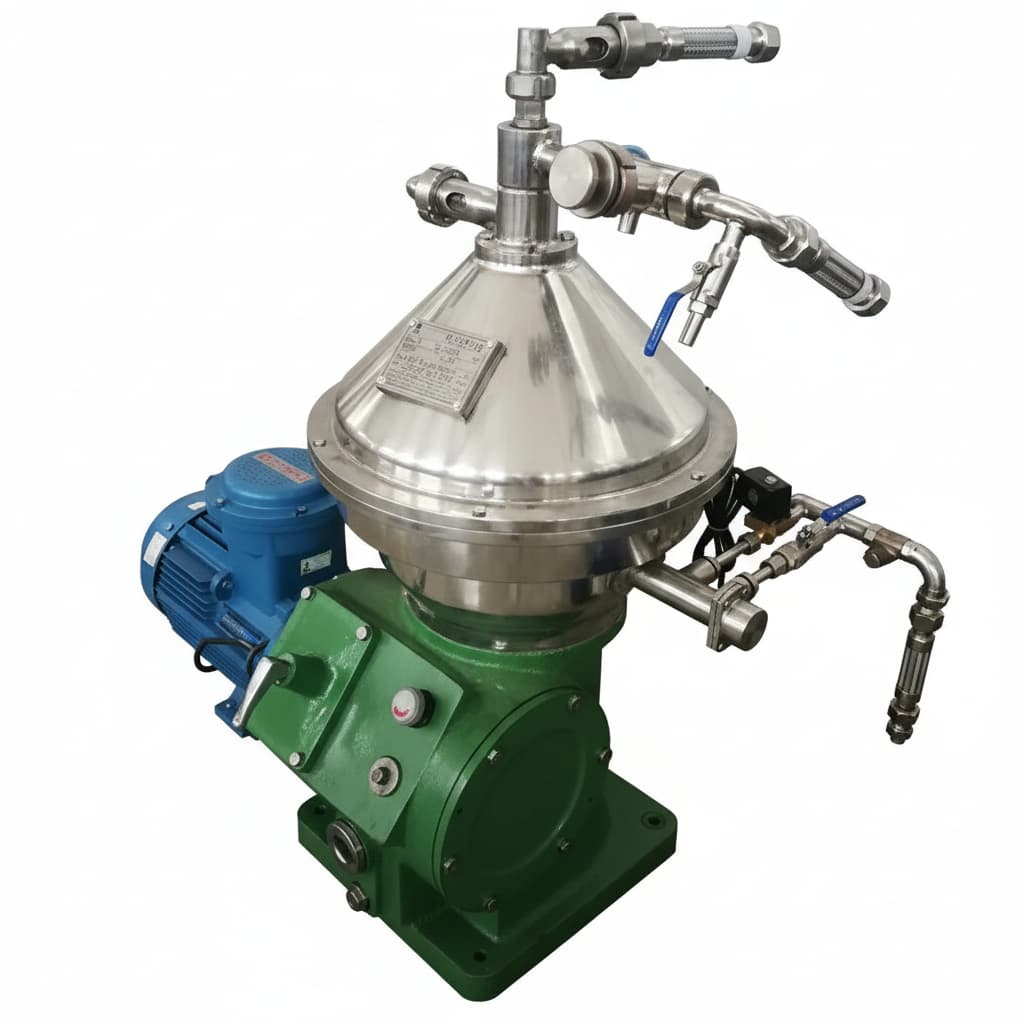
Industrial Centrifugal Separators are high-performance, mechanical separation systems that utilize centrifugal force—many times greater than gravity—to separate, clarify, or classify immiscible liquids and solids from liquids based on density differential. These precision-engineered machines are critical for achieving ultra-fine separations, dewatering slurries, purifying process streams, and recovering valuable products. Our centrifugal separators are designed for high throughput, operational reliability, and precise control in demanding process environments.
Liquid-Solid Separation: Clarification of process liquids, catalyst recovery, waste sludge dewatering, and starch separation.
Liquid-Liquid Separation: Separation of oil-water emulsions, purification of fuels and lubricants, and edible oil refining.
Liquid-Liquid-Solid (3-Phase) Separation: Simultaneous separation of two immiscible liquids and solids (e.g., in biodiesel processing, fish oil extraction).
Classification & Particle Sizing: Separation of particles by size and density in mineral and chemical processing.
Cell Harvesting & Clarification: Separation of biomass, yeast, or cell debris from fermentation broths in biotech and pharmaceutical production.
Wash & Purification: Counter-current washing of solids to remove impurities or mother liquor.
Chemical & Petrochemical
Pharmaceutical & Biotechnology
Food & Beverage (Dairy, Edible Oils, Beverages)
Marine & Offshore (Fuel/Oil/Water Separation)
Wastewater & Environmental
Mining & Minerals
Energy & Biofuels
Manufacturing (Metalworking Coolants)
Separation is driven by the application of intense centrifugal force. A mixture (feed) is introduced into a rapidly rotating bowl or drum. Denser components (solids or heavy liquid phase) are accelerated outward against the bowl wall, while lighter components (liquid or light liquid phase) form an inner concentric layer. Internal components (disc stacks, scrolls, baffles) then direct the separated phases to distinct discharge ports. The separating force (G-force) is a function of rotational speed and bowl diameter, enabling separation of micron and sub-micron particles.
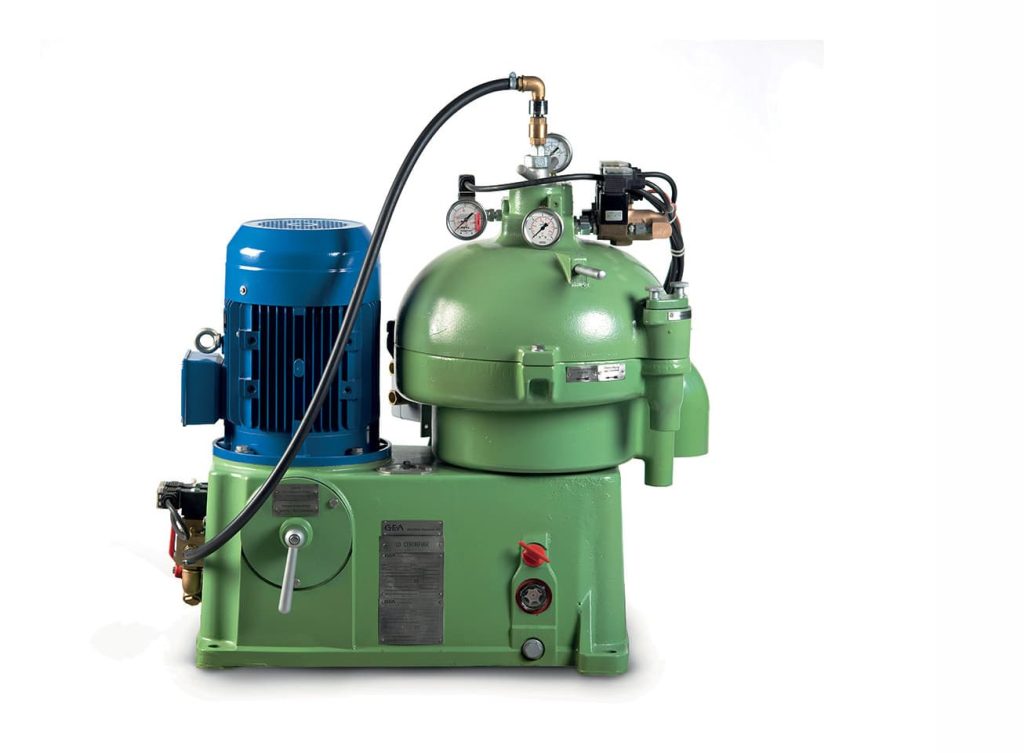
Disc Stack Centrifuges: Feature a stack of conical discs to provide a large settling area for rapid, continuous separation of liquids (liquid-liquid) or fine solids from liquids (liquid-solid). Can be self-cleaning (solids ejecting) or manual clean.
Decanter Centrifuges (Scroll-Type): Use a rotating cylindrical bowl with an internal scroll (screw conveyor) rotating at a differential speed. Continuously convey settled solids out of the liquid pool for dewatering or thickening.
Tubular Bowl Centrifuges: Utilize a long, narrow rotating tube for very high G-forces. Ideal for separating ultra-fine solids or immiscible liquids where extreme purity is required (e.g., vaccines, essential oils).
Basket Centrifuges (Perforated/Imperforate): Batch-operated machines where feed is introduced into a rotating basket. Liquid passes through a screen/perforations (perforate) or over a solid bowl wall (imperforate), with solids retained as a cake.
⚙️ Technical Specifications & Features
" Core Technical Specifications "
| Parameter | Specification Range | |
|---|---|---|
|
1 |
Separator Type |
Self-Cleaning Disc Stack (Hermetic/Non-Hermetic), Decanter, Tubular.
|
|
2 |
Throughput Capacity |
100 L/hr to 150,000+ L/hr (liquid). Solids capacity: 10 to 5,000+ kg/hr.
|
|
3
|
Bowl Speed |
3,000 to 15,000+ RPM.
|
|
4
|
Separating Force (G-Force) |
3,000 x g to 15,000+ x g.
|
|
5 |
Bowl Material |
Duplex/Super Duplex Stainless Steel, Titanium, Hastelloy.
|
|
6
|
Drive System |
Electric motor with frequency converter for soft start/speed control; gear or belt drive.
|
|
7 |
Control System |
Advanced PLC with HMI; fully automated cycles; parameter monitoring and data logging.
|
|
8 |
Discharge Mechanisms |
Peripheral nozzles, intermittent self-cleaning (hydraulic/pneumatic), continuous centripetal pump.
|
|
9 |
Sealing |
Mechanical seals; hermetic designs for oxygen-sensitive or foaming products.
|
|
10 |
Explosion Protection |
Options for ATEX/IECEx certification (pressurized purge, certified components).
|
|
11 |
Hygienic Design |
cGMP compliant; CIP/SIP systems; polished surfaces; aseptic designs available.
|
|
12 |
Utilities |
Process connections, service water, compressed air, electrical power.
|
" Advanced Technical Features "
Core Features
Precision Engineering for High G-Forces: Dynamically balanced bowls and robust spindle/bearing systems ensure smooth, vibration-free operation at extreme rotational speeds.
Advanced Automation & Control: PLC-controlled sequencing for feed, separation, discharge, and CIP cycles. Monitors key parameters (torque, vibrations, pressure) for optimal performance and predictive maintenance.
Optimized Hydraulics & Flow Paths: Engineered feed and discharge systems minimize turbulence and shear, preserving product quality and maximizing separation efficiency.
Efficient Solids Handling: Self-cleaning bowls with programmable ejection intervals maintain consistent clarity without manual intervention. Decanter scrolls with variable differential speed control optimize cake dryness.
Hygienic & Sterile Design: Polished surfaces, clean-in-place (CIP) systems, and steam-in-place (SIP) capabilities meet stringent hygiene standards for food and pharmaceutical applications.
Robust Construction & Corrosion Resistance: Critical wetted parts in high-grade alloys provide long service life with aggressive or abrasive process streams.
Competitive Advantages
Superior Separation Efficiency: Achieves clarities and separations unattainable with gravity-based systems, recovering valuable product and improving downstream process quality.
Continuous, High-Capacity Operation: Enables steady-state processing with high throughput in a compact footprint, reducing holding tanks and batch cycle times.
Reduced Operational Costs: Automated solids discharge minimizes labor; high recovery rates reduce product loss; efficient designs lower power consumption per unit volume processed.
Process Versatility & Scalability: A single machine can often handle multiple duties (clarification, purification, classification). Designs scale predictably from pilot to production.
Lifecycle Support & Optimization: From initial process testing in our lab to ongoing service and spare parts, we partner to ensure peak separator performance throughout its operational life.
Installation & Operational Requirements
Installation requires a solid, leveled foundation to absorb dynamic loads, along with connections for process piping, utilities, and drains. Successful operation depends on precise tuning of feed rate, bowl speed, discharge intervals, and (for decanters) differential speed. We provide comprehensive process support, including feed sample testing, installation supervision, commissioning, and operator training.