


Bag Filters
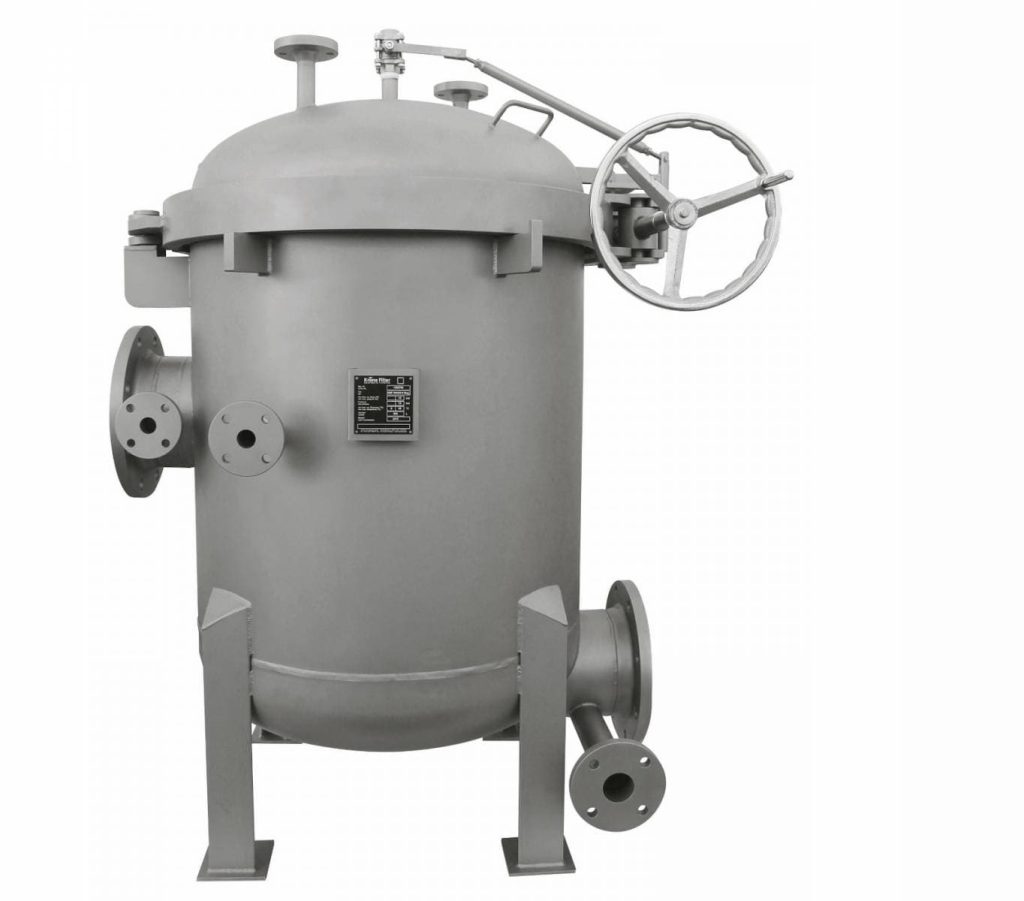
📝 Machine Overview
Industrial Bag Filters are robust, cost-effective, and highly efficient filtration systems designed for the removal of solid particulates from liquid process streams. Operating as depth filtration units, they utilize reusable, porous filter bags housed within durable pressure vessels to protect downstream equipment, ensure product purity, and meet environmental discharge standards. Our bag filter systems are engineered for high dirt-holding capacity, ease of maintenance, and reliable performance in demanding chemical, process, and wastewater applications.
Process Liquid Polishing: Final filtration of paints, coatings, inks, adhesives, and resins to remove gel particles and agglomerates.
Coolant & Machinery Protection: Continuous filtration of cutting oils, lubricants, and hydraulic fluids to remove metal swarf and wear debris.
Chemical Processing: Clarification of chemical intermediates, catalyst recovery, and removal of contaminants from solvents and acids.
Water & Wastewater Treatment: Pre-filtration or final polishing of process water, wastewater effluent, and wash-down water.
Food & Beverage: Filtering edible oils, syrups, beverages, and process water to ensure clarity and purity.
Pharmaceuticals: Pre-filtration of bulk ingredients and process water in non-sterile applications
Chemical Manufacturing
Paints, Coatings & Inks
Metalworking & Machining
Food & Beverage Processing
Pharmaceutical (Non-Sterile)
Water & Wastewater Treatment
Plastics & Polymers
Power Generation
The system operates on a pressure-driven depth filtration principle. The unfiltered liquid enters the pressure vessel (housing) and is directed to the inside of the filter bag. As the liquid passes through the multi-layered fabric of the bag—typically made of felted or woven materials—solid particles are trapped within the bag’s thickness or on its surface. The clean filtrate exits the housing via the outlet port. Filtration continues until the accumulating solids increase the differential pressure across the bag, signaling the need for bag replacement.
By Housing Design:
Single-Bag Housings: Economical for low-flow applications or as point-of-use filters.
Multi-Bag Housings: Contain 2 to 24+ filter bags for high-flow applications, providing greater surface area and longer service life.
Single- vs. Multi-Vessel Systems: Multiple housings can be piped in parallel for continuous operation; one vessel can be isolated for bag change while others remain online.
By Operation & Maintenance:
Standard Top-Loading: The most common. The vessel cover is removed to access and replace the filter bag from the top.
Quick-Change (Bag-in/Bag-out): Systems with sealing mechanisms that allow for rapid, contained bag changes, critical for toxic or hazardous materials.
By Filter Bag Media: Bags are available in a wide range of materials (Polypropylene, Nylon, Polyester, PTFE, Stainless Steel Mesh) and micron ratings to match specific chemical compatibility and particle size retention requirements.
⚙️ Technical Specifications & Features
" Core Technical Specifications "
| Parameter | Specification Range | |
|---|---|---|
|
1 |
Housing Connection Size |
1″ to 12″ NPT, Flanged (ANSI, DIN, JIS).
|
|
2 |
Number of Bags per Housing |
1, 2, 3, 4, 6, 12, 24.
|
|
3
|
Flow Rate Capacity |
10 to 2,000+ USGPM per housing, dependent on bag count and viscosity.
|
|
4
|
Design Pressure |
150 psi (standard) up to 300+ psi (high-pressure designs).
|
|
5 |
Design Temperature |
Up to 250°F (121°C) standard; higher with special seals/materials.
|
|
6
|
Housing Construction |
Carbon Steel (painted or epoxy-lined), Stainless Steel 304/316L.
|
|
7 |
Seal Materials |
Buna-N, EPDM, Viton®, PTFE.
|
|
8 |
Filter Bag Micron Ratings |
1, 5, 10, 25, 50, 100, 200 microns (nominal and absolute available).
|
|
9 |
Filter Bag Materials |
Polypropylene, Nylon, Polyester, PTFE, Nomex®, Stainless Steel Mesh.
|
|
10 |
Differential Pressure Gauge |
Standard inclusion to monitor filter loading and indicate change-out point.
|
|
11 |
Optional Instrumentation |
Pressure transmitters, differential pressure switches for automatic alerts.
|
|
12 |
Surface Finish (Sanitary) |
180- grit or electropolished finish, CIP capabilities available.
|
" Advanced Technical Features "
Core Features
High Dirt-Holding Capacity: Depth filtration media captures particles throughout the bag’s cross-section, not just on the surface, allowing for longer run times and lower operating costs.
Robust Pressure Vessel Design: Housings are ASME-coded (U-stamp optional) and hydrostatically tested to ensure safe containment under full operating pressure.
Leak-Free Sealing: Positive sealing systems (bag ring, inner seal, or o-ring) prevent bypass, ensuring all process fluid is filtered.
Ease of Maintenance: Top-opening design with swing-bolt or quick-release clamp allows for fast, tool-less bag change-outs, minimizing downtime.
Material Compatibility: A comprehensive selection of bag media and housing elastomers ensures corrosion resistance and fluid compatibility across the pH spectrum.
Cost-Effective Operation: Reusable housings and relatively inexpensive, disposable filter bags offer a lower total cost of ownership compared to many cartridge or fixed-screen systems.
Competitive Advantages
Optimized Filtration Economics: The combination of low-cost consumables (bags), high solids capacity, and rapid changeovers delivers superior operational efficiency.
Process Flexibility: A single housing can often accommodate different micron-rated bags, allowing one unit to serve multiple filtration stages or products.
Reduced Waste Volume: Spent filter bags are compact and contain solids in a manageable form, reducing disposal costs compared to slurries from backwashing filters.
Scalability & System Design: From a single unit to complex multi-housing systems with automatic valves and controls, we provide engineered solutions for any flow and duty requirement.
Global Compliance: Housings designed to meet ASME, PED, and other regional pressure vessel codes for worldwide deployment.
Installation & Operational Considerations
Installation requires proper support, inlet/outlet piping with isolation valves, and a vent/drain connection. System design must consider optimal placement of pressure gauges to monitor differential pressure (ΔP). Operational success depends on selecting the correct bag media (chemistry, temperature, micron rating) and establishing a ΔP-based change-out schedule. We offer application analysis and filter media trials to determine optimal configuration.
