


'/%3E%3C/svg%3E)
'/%3E%3Cpath%20d='m454%20250-4%204-4-4c-3%203-9%205-9%205l2-5q-9%205-10%203c-1-1%2010-12%2012-26%200-1%203-18-8-13-2%201-4-5%200-7%203-2%2010-1%2011%200q1-2%203-2c2%200%2011%201%2014%206%202%205%202%2014%202%2015q0%2015%208%2027c-1%201-8-2-8-2v3s-7-2-9-4m-12-32c4%2014-9%2031-11%2033%2011%200%2012-10%2015-24l1%201c-2%2011-5%2022-8%2025l7-4%203-22h1l-3%2022%203%203%203-3-1-21h1l1%2021%208%203c-5-8-6-25-6-23h1c2%2012%203%2022%2012%2022-3-3-8-16-7-25q0-12-2-15-6-3-10%202-2%202-5-1c-2-2-1-2-6-4q-7-2-6%205s9-3%2013%205zm7-8q-3%201-1%202%203%200%201-2'/%3E%3C/g%3E%3C/svg%3E)
Pilot Reactors
📝 Machine Overview
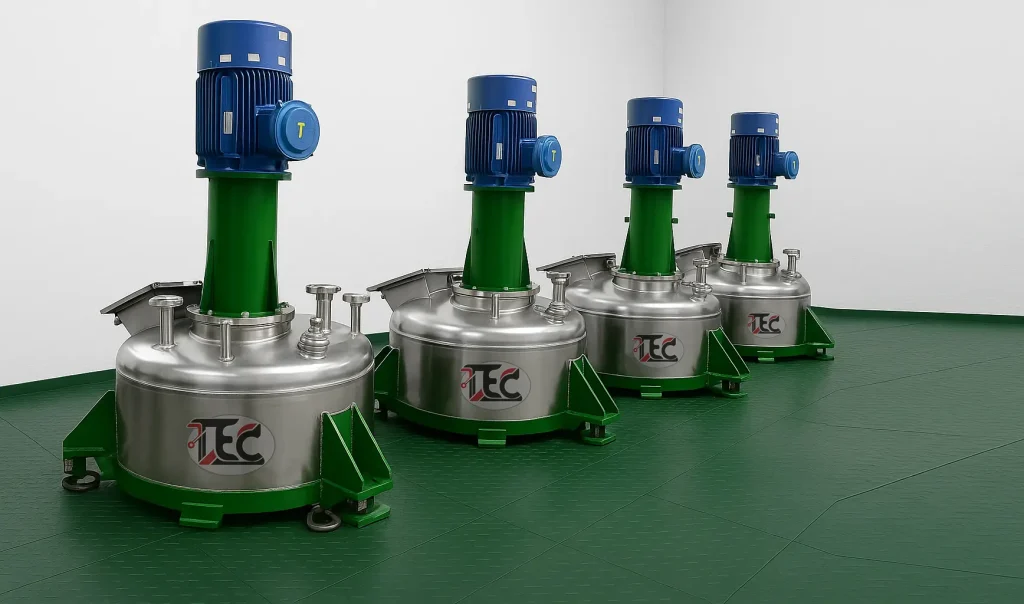
Pilot Reactors are versatile, fully-instrumented small-scale process systems designed to bridge the critical gap between laboratory research and full-scale industrial production. These systems are not merely scaled-down production reactors; they are engineered to provide precise control over chemical and physical process parameters—temperature, pressure, agitation, dosing, and mass transfer—while generating the data necessary for safe, reliable, and economical scale-up. Our pilot reactors serve as the definitive platform for process development, optimization, and small-lot production.
Process Development & Optimization: Determining optimal reaction conditions (T, P, concentrations, time) for new chemical entities or products.
Catalyst Screening & Evaluation: Testing activity, selectivity, and lifetime of novel catalysts on relevant feedstocks.
Kinetic & Thermodynamic Data Generation: Collecting data for reaction modeling and scale-up calculations.
Safety Studies & Calorimetry: Identifying exotherms, gas evolution, and thermal runaway risks under controlled, instrumented conditions.
Clinical Trial & Pre-Commercial Material Production: Manufacturing small batches of high-value materials under GMP-like conditions for regulatory submissions and market testing.
Troubleshooting & Root Cause Analysis: Simulating production issues at the pilot scale to diagnose and solve problems without disrupting main manufacturing.
Pharmaceutical & Fine Chemical Development
Agrochemical & Specialty Chemical R&D
Catalyst & Material Science Research
Consumer Products (Coatings, Adhesives)
Biotechnology & Fermentation Process Development
Energy & Petrochemical Research
Academia & Government Research Institutes
Pilot reactors operate on the same fundamental chemical engineering principles as production units, but with enhanced instrumentation and flexibility. The core objective is to establish a defined and reproducible Process Window. By systematically varying and controlling parameters (e.g., via Design of Experiments), users can map reaction kinetics, identify safe operating limits, optimize yields, and characterize product quality. This data is then used to create mathematical models for scaling geometric and dynamic similarities to the production scale.
Jacketed Glass Reactor Systems: For visual observation of reactions (0.5L to 50L). Ideal for process chemistry development, crystallization studies, and multiphase reactions.
Stainless Steel/Hastelloy Pilot Reactors: For higher pressure/temperature, corrosive chemistry, or GMP-oriented processes (2L to 100L). Often configured as skids.
High-Pressure Autoclave Systems: For hydrogenation, oxidation, supercritical fluid, and other pressurized gas-liquid-solid reactions (100 ml to 5L).
Continuous Flow Pilot Reactors: Tubular or micro-reactor systems for studying continuous reaction kinetics and process intensification.
Polymerization & High-Viscosity Reactors: Specialized with powerful agitation and viscous fluid handling for polymer, adhesive, and resin development.
⚙️ Technical Specifications & Features
" Core Technical Specifications "
| Parameter | Specification Range | |
|---|---|---|
|
1 |
Reactor Vessel |
Borosilicate Glass (GG17/PTFE coated) or SS316/Alloy; 2L, 5L, 10L, 20L, 50L.
|
|
2 |
Design Pressure (Internal) |
Full vacuum to 10 bar (glass), up to 100+ bar (steel autoclaves).
|
|
3
|
Design Temperature |
-80°C to +250°C (with appropriate bath/fluid).
|
|
4
|
Jacket & Temperature Control |
External circulator/chiller for heating & cooling; PTFE or dimple jacket.
|
|
5 |
Agitation System |
Overhead mechanical stirrer with PTFE/SS seal; variable speed (50-1200 RPM).
|
|
6
|
Impeller Options |
Anchor, retreat curve, pitched turbine, gas dispersion.
|
|
7 |
Instrumentation Ports |
Multiple NS/ISO ports for sensors, feeding, sampling, reflux, distillation.
|
|
8 |
Process Control & Data Acquisition |
Touchscreen PID controller or PLC/HMI for T, RPM, dosing; data logging software.
|
|
9 |
Dosing/Metering Pumps |
Optional syringe or diaphragm pumps for precise additive feed.
|
|
10 |
Condenser & Distillation |
Graham or Dimroth condenser; optional distillation head.
|
|
11 |
Pressure Control |
Digital pressure sensor with gas inlet/vent valves; safety rupture disc.
|
|
12 |
Frame & Mobility |
Rigid SS mobile trolley with service connections.
|
|
13 |
Optional Modules |
Inline FTIR/Raman probes, particle size monitors, automated sampling, pH/DO control.
|
" Advanced Technical Features "
Core Features
Comprehensive Process Instrumentation: Equipped with precise sensors for temperature (reactor, jacket), pressure, agitation speed/torque, and pH/redox, providing a complete process data set.
Precise Feed & Temperature Control: Programmable dosing pumps and high-stability circulators enable exact control of addition rates and thermal profiles, critical for kinetic studies and safety.
Modular & Flexible Design: Standardized ports and modular components (condensers, feeding funnels, stirrers) allow the system to be rapidly reconfigured for different reaction types (reflux, distillation, precipitation).
Robust Safety Integration: Includes primary (controller alarms) and secondary (mechanical rupture disc, pressure relief valve) safety systems, along with leak detection and emergency cooling options.
Data Integrity & Scale-Up Readiness: Software logs all process parameters with time stamps, enabling easy data export for analysis and creating an immutable record for regulatory submissions.
Material Compatibility & Containment: Selection of wetted materials (glass, PTFE, SS316L, Hastelloy C) ensures compatibility with aggressive chemistries, while sealed designs allow for containment of potent compounds.
Competitive Advantages
De-Risked Commercialization: Provides the critical engineering data needed to design a safe, efficient, and cost-effective production process, avoiding costly failures at the plant scale.
Accelerated Development Timelines: Enables rapid iteration of process conditions and generation of high-quality data, shortening the path from discovery to manufacturing.
Reduced Scale-Up Uncertainty: By operating in a regime that closely mimics production dynamics (agitation, mass/heat transfer), pilot reactors provide a more reliable scale-up factor than simple lab glassware.
Multi-Purpose Utility: A single, well-equipped pilot reactor system can serve numerous projects across different chemistry platforms, maximizing return on capital investment.
GMP-Ready Configuration: Systems can be designed and documented to support the production of materials for clinical trials under a quality-by-design (QbD) framework.
Selection & Operational Considerations
Selection is based on process requirements: pressure, temperature, corrosion, need for visualization, and required data output. Successful operation requires careful SOP development, calibration of instrumentation, and understanding of the system’s heat and mass transfer characteristics. We provide comprehensive FAT, installation support, and operator training to ensure users can extract maximum value.
