


Capping Machines
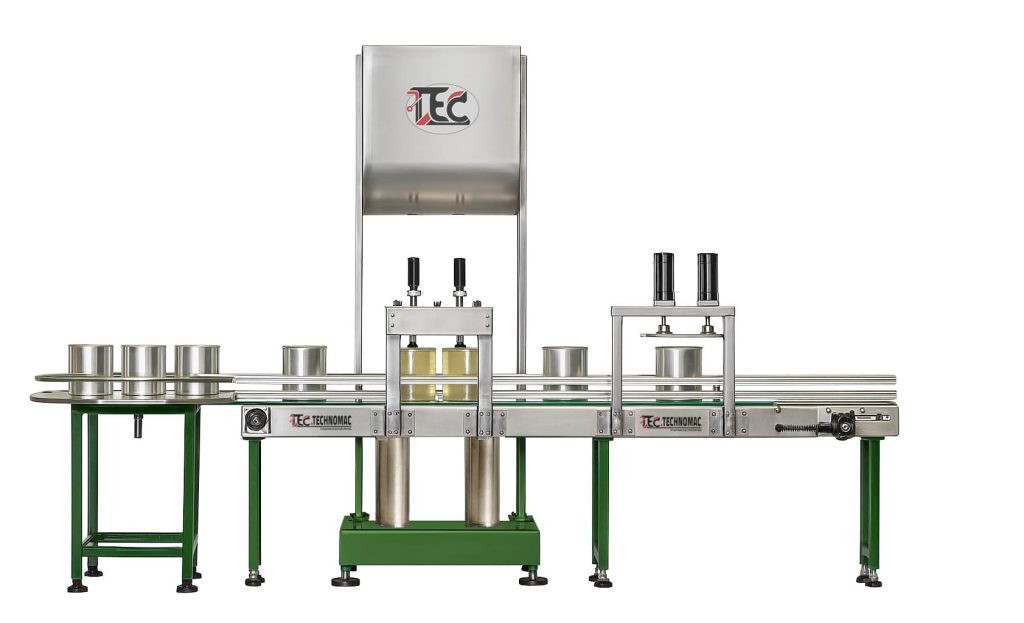
📝 Machine Overview
Precision Capping Machines are automated systems designed to accurately apply and secure closures—including screw caps, lids, pumps, sprays, and corks—onto containers at high speed. As the final seal in the packaging process, they are critical for ensuring product integrity, preventing leakage, preserving freshness, and meeting tamper-evident requirements. Our capping machines are engineered for reliability, precise torque control, and seamless integration into packaging lines, handling a vast array of container and closure types with consistent, audit-ready performance.
Beverage & Food: Applying screw caps, sports caps, and R.O.P.P. caps to water, juices, sauces, and condiments.
Pharmaceuticals & Healthcare: Precision capping of vials, medicine bottles, and ointment jars with child-resistant (CR) and tamper-evident features.
Chemicals & Household: Sealing containers of cleaners, solvents, paints, and lubricants with leak-proof closures.
Cosmetics & Personal Care: Applying elegant pumps, sprays, flip-tops, and screw caps to bottles and jars of lotions, serums, and shampoos.
Automotive & Industrial: Capping containers for adhesives, sealants, and specialty fluids.
Food & Beverage
Pharmaceuticals & Biotechnology
Cosmetics & Personal Care
Chemicals & Household Products
Lubricants & Adhesives
Contract Packaging (Co-packers)
Agrochemicals
The process involves precise mechanical interaction between the closure and container neck. Containers are indexed into the capping station where closures are fed from a sorting bowl or magazine. A capping head—employing chuck, spindle, or belt-driven technology—grips the closure, aligns it with the container, and applies a controlled rotational force (torque) and/or downward pressure to secure it. Advanced systems can also apply tamper-evident bands, inner seals, or actuate pump and spray mechanisms.
By Drive & Technology:
Chuck Cappers: The most common type. Rotating chucks grip the cap and spin it onto the container. Ideal for a wide range of screw caps.
Spindle Cappers: Multiple vertical spindles rotate to apply caps; excellent for high-speed applications and fragile containers.
Roll-On Cappers: Form thread onto plain aluminum caps (pilfer-proof caps) for bottles (beverages, pharmaceuticals).
Snap Cappers: Apply non-threaded press-on lids using controlled vertical pressure.
R.O.P.P. (Roll-On Pilfer-Proof) Cappers: Specialized for applying and forming aluminum closures in one action.
By Automation Level:
Inline Cappers: Containers move in a straight line under single or multiple capping heads.
Rotary Cappers: Containers move on a rotary turret for continuous, high-speed capping, often integrated with filling.
Semi-Automatic/Single-Head: Operator places cap; machine applies precise torque. For low-volume or R&D.
By Closure Type: Machines can be configured for screw caps, flip-top caps, trigger sprays, pumps, corkers, and overcaps.
⚙️ Technical Specifications & Features
" Core Technical Specifications "
| Parameter | Specification Range | |
|---|---|---|
|
1 |
Capping Technology |
Chuck (Single/Multi), Spindle, Snap, R.O.P.P.
|
|
2 |
Closure Types |
Screw caps (plastic/metal), pumps, sprays, corks, press-on lids.
|
|
3
|
Container Diameter Range |
10 mm to 150 mm (adjustable guides and change parts).
|
|
4
|
Closure Diameter Range |
8 mm to 120 mm.
|
|
5 |
Torque Range & Accuracy |
0.5 Nm to 50 Nm; accuracy typically ±5% of set value.
|
|
6
|
Speed (Containers/Minute) |
Semi-auto: 10-30 CPM; Inline: 30-150 CPM; Rotary: 100-600+ CPM.
|
|
7 |
Drive System |
Servo motors for precise torque control; PLC with HMI.
|
|
8 |
Cap Feeding |
Vibratory bowl feeder with escapement, or horizontal magazine.
|
|
9 |
Height Adjustment |
Motorized or manual, for quick container size changeover.
|
|
10 |
Torque Monitoring |
Real-time display and data logging of applied torque; SPC outputs.
|
|
11 |
Frame & Construction |
Rigid stainless steel or powder-coated carbon steel frame.
|
|
12 |
Safety |
Full guarding with safety interlocks, e-stop, and two-hand controls where applicable.
|
|
13 |
Changeover Time |
Typically <15 minutes with quick-change parts and stored recipes.
|
" Advanced Technical Features "
Core Features
Precision Torque Control: Closed-loop servo systems or precision clutches ensure exact, repeatable application torque, preventing under-tightening (leaks) and over-tightening (damage).
Intelligent Cap Handling: Orienting feeders and gentle escapement mechanisms ensure 100% correct cap presentation and eliminate jams, even with non-standard or complex closures.
Universal Container Handling: Adjustable guide rails, container stabilizers (belt or bell), and soft-touch grippers accommodate glass, plastic, and metal containers without marring.
Rapid, Tool-Less Changeover: Quick-release chucks, snap-in change parts, and motorized height/width adjustments minimize downtime between production runs.
Hygienic & Cleanable Design: Smooth surfaces, minimized ledges, and easy disassembly for sanitation. Options for wash-down (IP65) duty for food/pharma.
Advanced Diagnostics & Data Integrity: PLC tracks OEE, jam locations, torque trends, and production counts. Audit trail functionality for regulated industries.
Competitive Advantages
Zero Leak Guarantee: Consistent, controlled torque application ensures a perfect seal every time, reducing customer complaints and product loss.
Maximized Line Uptime: Robust construction, jam-prevention systems, and fast changeovers deliver exceptional overall equipment effectiveness (OEE).
Future-Proof Flexibility: Modular design allows for easy upgrades (adding torque monitoring, new closure types) and adaptation to future packaging formats.
Reduced Cap & Container Waste: Precise handling and gentle application minimize scuffing, crushing, and thread damage.
Seamless Line Integration: We engineer for direct synchronization with upstream fillers and downstream labelers, providing single-source responsibility for the packaging line.
Installation & Integration
Requires a level floor, connection to power and compressed air, and integration with the upstream conveyor. Critical to performance is matching the capper’s capabilities to the specific closure (thread profile, material) and container (neck finish, strength). We offer comprehensive testing with customer-supplied samples, on-site installation, calibration to target torque specifications, and operator training.
