Written by: Technomac Experts | November 5, 2025
Introduction
Industrial engineering has always stood at the crossroads of technology, design, and efficiency.
But over the last decade, the sector has experienced one of the fastest transformations in its history.
Driven by digitalization, sustainability, and the constant pursuit of operational excellence, modern industrial engineering has evolved from traditional mechanical processes into a data-driven, innovation-led ecosystem.
This article explores the most significant innovations shaping today’s industrial landscape — from automation and smart manufacturing to new materials and digital design — and how these developments are redefining production across multiple industries.
1. The Era of Smart Manufacturing
Smart manufacturing is no longer a futuristic concept — it’s the new standard.
By integrating IoT (Internet of Things), AI (Artificial Intelligence), and machine learning, modern factories now operate with real-time visibility and unprecedented precision.
Machines are equipped with sensors that continuously monitor performance, energy consumption, and output quality.
This allows predictive maintenance and real-time adjustments that minimize downtime and improve productivity.
In short: modern engineering systems are becoming intelligent — not just efficient.
2. Data-Driven Design and Digital Twins
Design and simulation have become digital, collaborative, and incredibly precise.
Through digital twin technology, engineers can now create virtual models of machines or entire production lines — testing their performance, durability, and efficiency before physical manufacturing even begins.
This shift has significantly reduced the margin of error, shortened development cycles, and optimized material use.
It also bridges the gap between design teams, production engineers, and maintenance specialists, ensuring smoother communication across departments.
3. Advanced Materials and Sustainable Engineering
Material science is another field witnessing remarkable progress.
Lightweight composites, corrosion-resistant alloys, and recyclable polymers are being adopted to increase machine lifespan and energy efficiency.
But sustainability isn’t just about materials — it’s about mindset.
Modern industrial engineering increasingly focuses on eco-design, energy recovery, and waste reduction, ensuring that efficiency doesn’t come at the expense of the environment.
“Efficiency is no longer measured by speed alone, but by how responsibly we achieve it.”
4. Automation and Human Collaboration
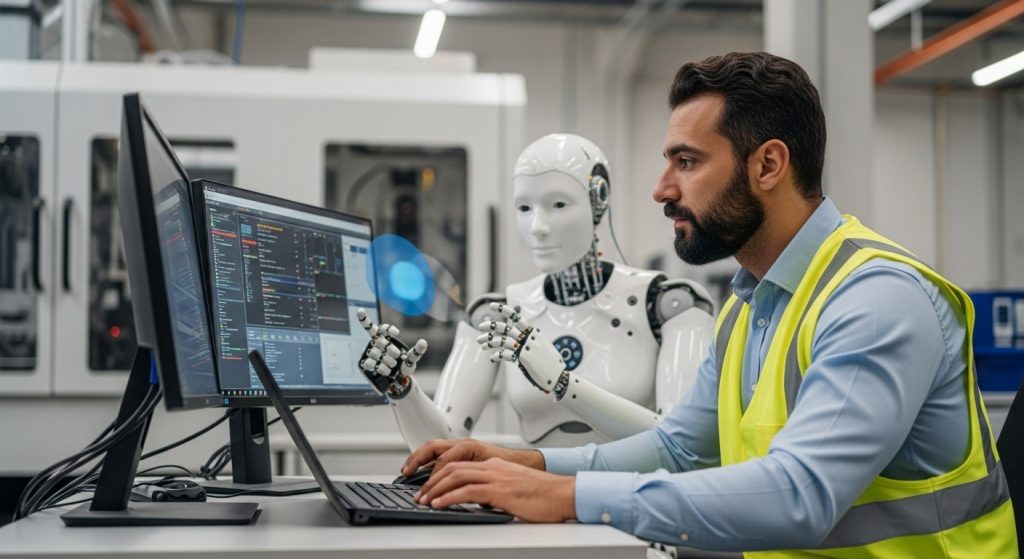
While automation remains a cornerstone of industrial progress, the modern vision is not to replace humans — but to empower them.
Collaborative systems now blend human creativity with machine precision, leading to more flexible and adaptive production environments.
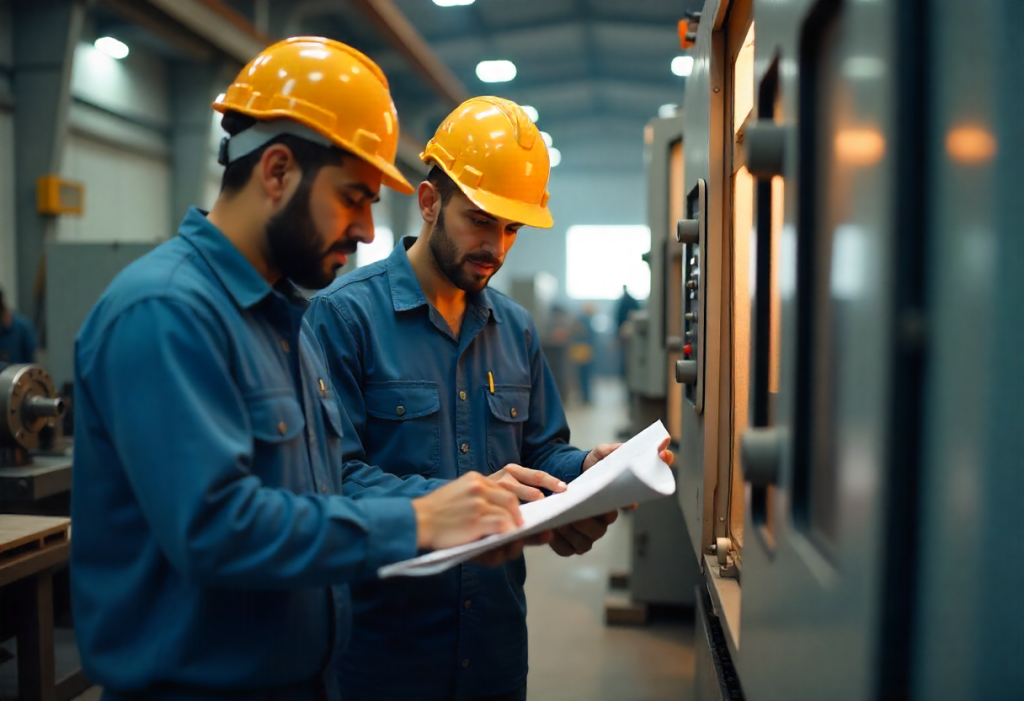
Engineers and technicians are shifting from manual operation to supervisory and analytical roles, controlling smart systems that learn and evolve over time.
This human-machine synergy defines the new face of modern engineering: intuitive, safe, and highly productive.
5. Integration of AI and Predictive Maintenance
Artificial Intelligence is transforming how industries think about reliability and maintenance.
Instead of waiting for failures, AI-driven systems now anticipate them.
Algorithms analyze vibration data, temperature changes, and machine learning patterns to detect anomalies before they lead to costly breakdowns.
The result is a fundamental shift from reactive to proactive maintenance — maximizing uptime and saving substantial operational costs.
6. Digital Collaboration and Global Connectivity
Thanks to cloud-based platforms and advanced CAD/CAM systems, collaboration no longer depends on geography.
Engineering teams from different countries can now co-design, review, and simulate the same project in real time.
This level of integration has accelerated innovation cycles and made knowledge sharing easier than ever, fostering a truly global engineering culture.
7. The Future: Human-Centric Industrial Systems
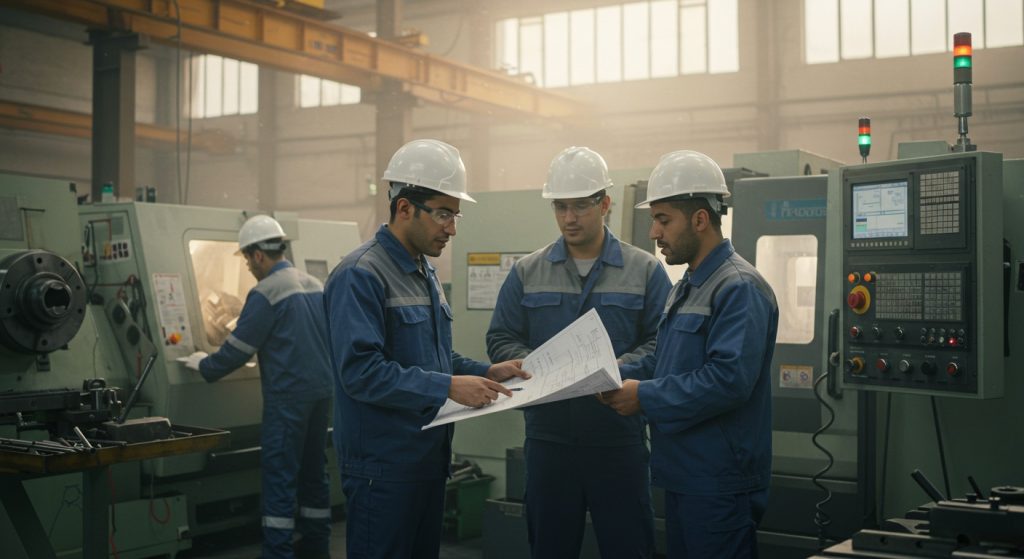
As technology becomes more integrated, the next phase of innovation focuses on human-centric design — creating systems that prioritize safety, adaptability, and ergonomics.
The goal is not only to make machines smarter, but also to make workplaces safer, cleaner, and more inspiring for those who operate them.
Future industrial facilities will balance automation with creativity, data with intuition, and efficiency with sustainability.
Conclusion
Industrial engineering today is about transformation — not iteration.
Innovation is redefining how we design, build, and maintain the world’s machinery.
From smart factories to sustainable production, every advancement brings us closer to a more intelligent, connected, and responsible industrial future.
The true power of modern engineering lies in its ability to merge technology with human insight — and that’s where the next era of progress begins.
Ready to build your production line?
Our experts design and build custom industrial machines tailored to your needs.