Written by: Technomac Experts | November 21, 2025

Functional Design in Industrial Manufacturing is revolutionizing how the modern world builds, optimizes, and innovates production systems. In today’s fast-evolving industry, functional design in industrial manufacturing has become the foundation for smarter, safer, and more efficient machines.
The Shift from Manufacturing to Engineering Solutions
In the rapidly changing world of industrial manufacturing, success is no longer defined by how many machines a company produces — but by how intelligently those machines are designed. The modern industrial revolution isn’t about mass production; it’s about purpose-driven engineering.
This shift from quantity to functionality has reshaped how manufacturers think, design, and deliver solutions.
Traditionally, factories focused on producing standardized machines that could serve general purposes across multiple industries. While this approach offered scalability, it often led to inefficiencies, wasted energy, and underperformance when machines were used in specialized applications.
Today, forward-thinking manufacturers have realized that custom-engineered machines — designed specifically for a task, environment, or material — can outperform any mass-produced alternative. It’s not about creating one-size-fits-all equipment anymore; it’s about engineering intelligence into steel and motion.
The Egyptian Example: Innovation Meets Craftsmanship
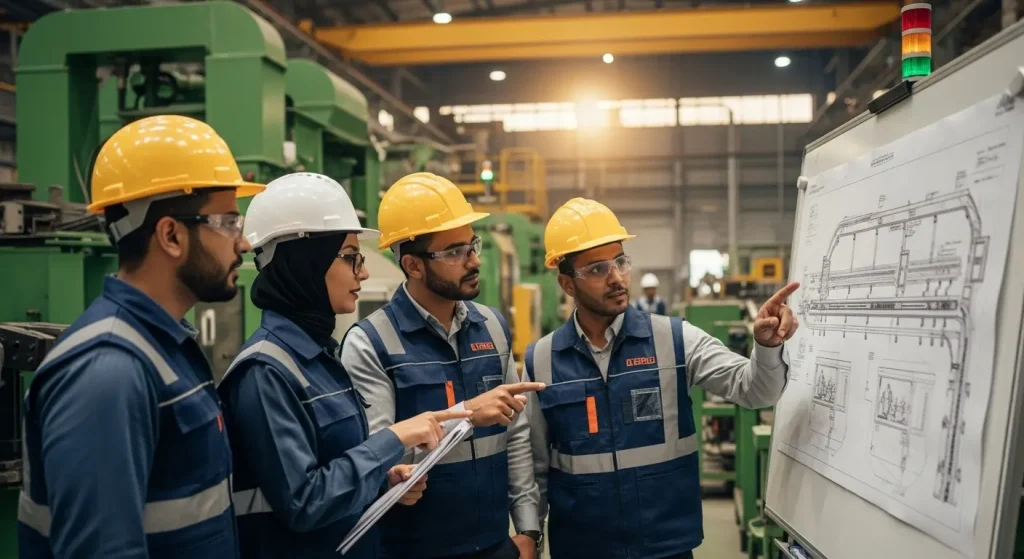
A growing number of Egyptian manufacturers have started to adopt functional design in industrial manufacturing as their strategic core. Instead of simply assembling machines, they are integrating design thinking into the heart of their process — observing real challenges on the factory floor and developing solutions tailored to them.
Egypt’s manufacturing sector is quietly evolving into a hub of smart engineering. Companies that once relied on imported designs are now developing their own — integrating local expertise with global standards. They understand that the key to growth lies in innovation rooted in function.
When an Egyptian factory designs a production line from scratch — ensuring each component is purpose-built — the result is not just a machine. It’s a reflection of intelligence, creativity, and national capability. These are the machines that are now being exported across the Middle East and Africa, proving that design-driven manufacturing is not exclusive to industrial giants.
“The rise of functional design in industrial manufacturing proves that innovation starts with purpose-driven engineering.”
The Power of Functional Design
Functional design in industrial manufacturing begins with a single question:
What exactly does this machine need to do — and how can we make it do that better than ever before?
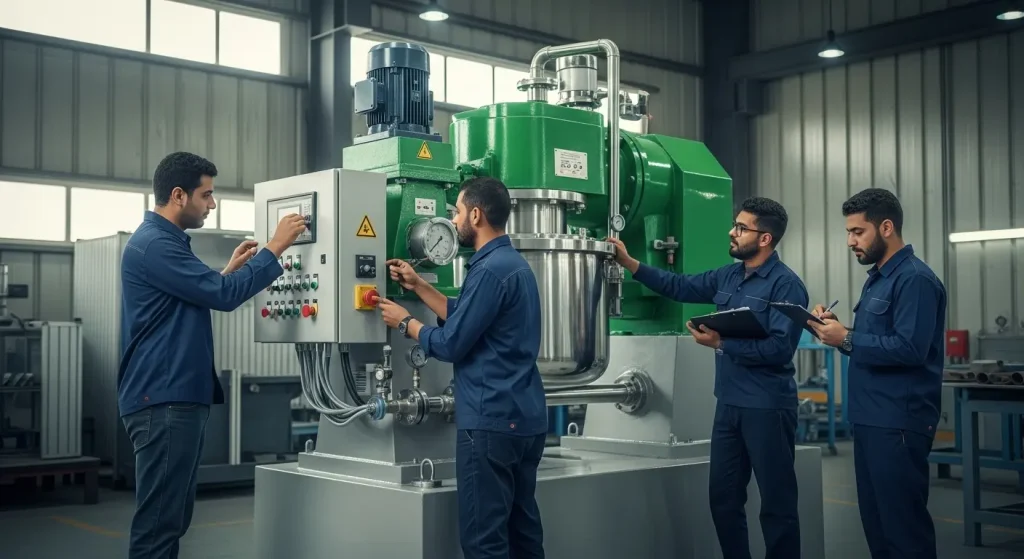
It’s a process that requires collaboration between designers, engineers, and operators. Each part — from the mixer blades to the control systems — is optimized for performance, safety, and ease of use.
This approach delivers measurable results:
Higher Efficiency: Machines consume less energy and operate with greater precision.
Longer Lifespan: Custom materials and protective coatings are chosen based on the machine’s exact working conditions.
Operator Comfort: Ergonomic design reduces fatigue and enhances safety.
Adaptability: Modular systems allow machines to evolve as production needs change.
When functionality leads the design process, every nut, bolt, and motor contributes to a single purpose — excellence.
“Companies adopting functional design in industrial manufacturing gain a clear competitive advantage through custom-built systems and precision engineering.”
Case in Point: The Rise of Specialized Machinery
Consider industries like fertilizer production, paint manufacturing, or chemical processing. Each has its own material properties, viscosity challenges, and temperature demands. A standard mixing or milling machine often fails to deliver the consistency or stability these industries require.
This is where functional design in industrial manufacturing shines.
A sand mill optimized for pigment dispersion, or a reactor engineered for specific chemical reactions, can dramatically improve product quality and reduce waste.
By focusing on how the machine interacts with its material, not just how it runs, manufacturers achieve levels of control that were once impossible.
Looking Ahead: Designing the Future
The future belongs to manufacturers who see design as a strategic advantage. As automation, AI, and digital modeling continue to shape industry, the companies that invest in functional design in industrial manufacturing will lead the transformation.
Because in the end, the real innovation isn’t in the steel, sensors, or motors — it’s in the thinking that connects them.
When design meets purpose, machinery becomes more than metal; it becomes a symbol of progress.
Ready to build your production line?
Our experts design and build custom industrial machines tailored to your needs.