Written by: Technomac Experts | November 25, 2025

In a world where industrial progress moves at an unprecedented pace, thousands of factories still rely on legacy machinery — robust, time-tested systems that have served for decades. Yet, when these machines begin to age and spare parts become rare or obsolete, production efficiency faces serious risks. Fortunately, engineering innovation is offering smart, sustainable ways to breathe new life into these aging giants.
The Challenge of Legacy Systems
Legacy industrial systems, while built to last, often struggle to keep up with today’s precision requirements and digital integration demands. Their components wear out, control units become outdated, and spare parts disappear from the market. Replacing the entire system is rarely an economical option — especially when the core structure of the machine remains solid.
That’s where modern engineering steps in, transforming “old but gold” machines into revitalized, high-performing assets.
Smart Engineering: The Key to Revival
Modern industrial engineers are no longer limited to traditional repair methods. Today, they combine multiple disciplines — design thinking, reverse engineering, and digital modeling — to recreate, enhance, and sometimes even upgrade the performance of outdated machinery.
Some of the most effective solutions include:
1. Reverse Engineering and 3D Scanning
Through 3D scanning technologies, engineers can capture precise measurements of damaged or missing parts. Using this data, they digitally reconstruct components and reproduce them using CNC machining or 3D printing.
This method ensures a perfect fit while often improving material quality and tolerances beyond the original design.
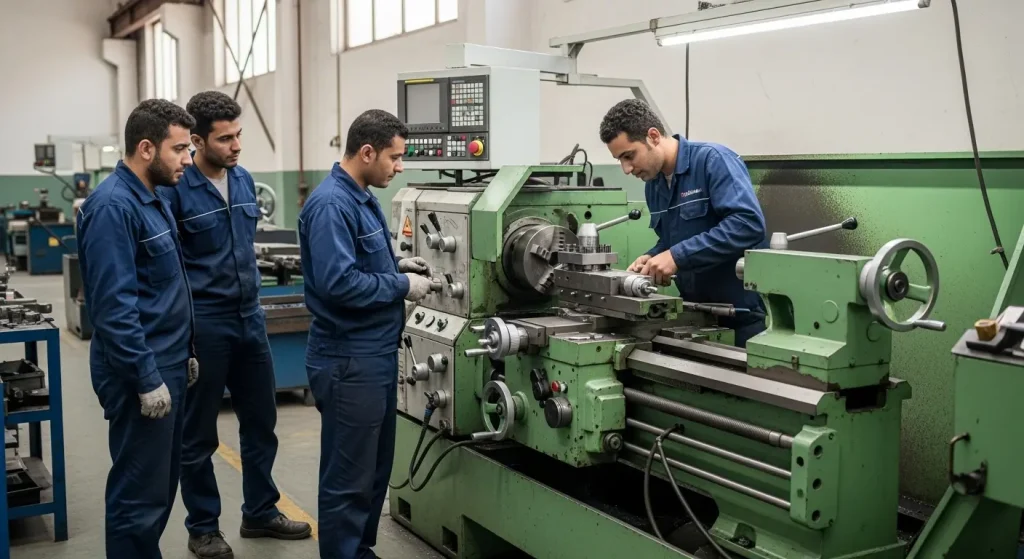
2. Advanced Machining (Turning, Milling, and Lathe Work)
Machining — particularly lathe work — remains one of the most reliable and vital tools in reviving old machines. When precision shafts, couplings, or gears are no longer available, expert machinists can recreate them with micron-level accuracy using high-strength alloys.
Unlike mass production, these custom parts are engineered to fit specific operational stresses and loads, extending the machine’s working life significantly.
In many Egyptian and regional factories, local workshops equipped with CNC lathes have become lifelines for industries maintaining legacy systems.
3. 3D Printing and Additive Manufacturing
For intricate parts that are difficult or costly to machine, additive manufacturing (3D printing) offers a revolutionary solution. Engineers can print parts layer by layer using advanced polymers or metal composites, allowing for lightweight yet strong components.
This technology also enables rapid prototyping — reducing downtime from weeks to days.
4. Control System Upgrades
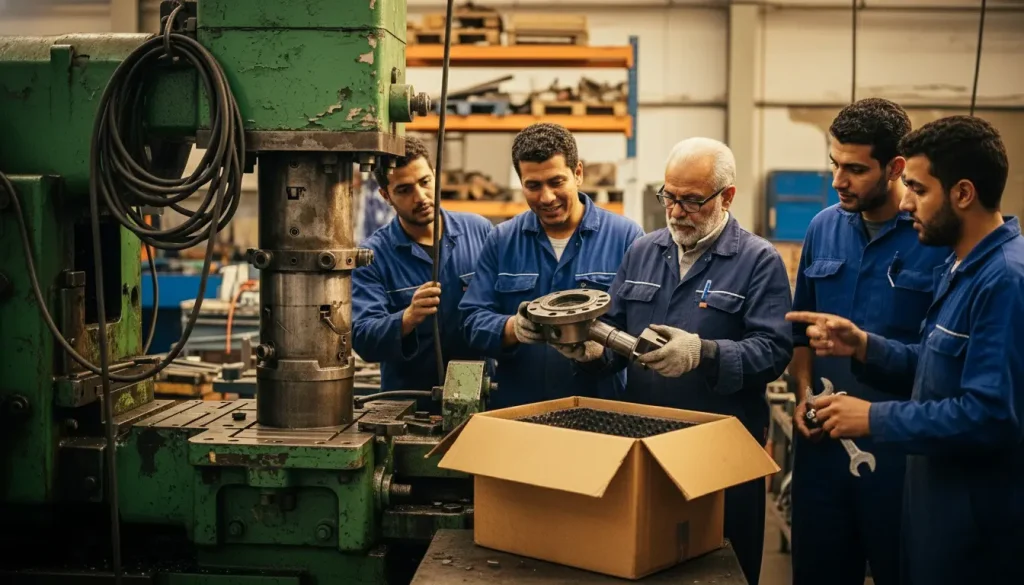
Often, the mechanical components of legacy machines are still functional — it’s the electrical systems that fall behind. By integrating modern PLCs, sensors, and control panels, engineers can transform old equipment into smart, automated systems without altering their structural design.
This hybrid approach provides digital precision, real-time monitoring, and improved safety — all while preserving the mechanical integrity of the machine.
The Balance Between Heritage and Innovation
The true genius of modern engineering lies in balancing respect for traditional craftsmanship with the power of modern technology. A lathe operator’s manual skill complements the precision of CAD models and CNC systems. Together, they ensure that no machine becomes obsolete simply because its original manufacturer stopped producing parts.
In Egypt and across emerging industrial markets, this synergy between traditional machining and advanced digital methods is reshaping the way factories operate. Instead of discarding old machines, they’re reviving them — smarter, stronger, and more efficient than ever.
Looking Ahead
As industries face rising costs and sustainability challenges, the ability to restore and enhance legacy machinery will define future competitiveness.
Innovation isn’t just about creating new machines; it’s about engineering smarter ways to keep existing ones alive.
When machining meets 3D printing, and human expertise aligns with digital precision — the past doesn’t fade away; it evolves.
That’s the essence of true industrial innovation: giving yesterday’s machines a future.
Ready to build your production line?
Our experts design and build custom industrial machines tailored to your needs.